- Vehicles
- Small & Midsize Rental Cars in Iceland
- Family Rental Cars in Iceland
- Rent electric car in iceland
- 4x4 Car Rental in Iceland
- Suzuki Jimny 4x4
- Dacia Duster 4x4
- Suzuki Vitara 4x4
- Suzuki Vitara auto 4x4
- Dacia Bigster 4x4
- Kia Sportage 4x4 Auto
- Kia Sportage PHEV 4x4 auto
- Mitsubishi Outlander PHEV 4x4 auto
- Toyota Rav4 4x4 auto
- Kia Sorento 4x4 auto
- Mercedes Benz 350 GLE PHEV 4x4 auto
- Toyota Landcruiser 150 4x4 auto
- Toyota Landcruiser 250 4x4 auto
- Landrover Discovery 5 4x4 auto
- Landrover Defender 4x4 auto
- Prestige
- Rent a Minivan in Iceland
- 4x4 Camper
- Motorhomes
- Driving in Iceland
- Services
- Locations
- Travel Inspiration
- South Iceland: A complete guide
- Reynisfjara Beach in Iceland - Your Guide to a Safe Visit
- Best Times to Visit the Golden Circle in Iceland
- North Iceland: A Complete Guide for Drivers
- East Iceland A Complete Guide for Drivers
- West Iceland The Complete Driver’s Guide
- Your Ultimate Guide to Exploring Iceland’s Ring Road
- Driving the Diamond Circle in Iceland: Your Ultimate Guide
- Driving Iceland's Golden Circle: Your Ultimate Guide
- A 10-Day Itinerary in Iceland: Tips + Ideas
- The Perfect Itinerary for 7 Days in Iceland
- The Best Time to See the Northern Lights in Iceland with a Rental Car
- Renting a Camper in Iceland: The Complete Guide
- Getting to Iceland: A Comprehensive Guide on How to Reach the Land of Fire and Ice
- Nature Bath Locations in Iceland: A Complete Guide
- Iceland with Kids: A 5-Day Self-Drive Itinerary
- Winter Driving in Iceland: A Comprehensive Overview for Foreign Tourists
- The Total Solar Eclipse in Iceland – August 12, 2026
- Exploring Iceland's National Parks on a Self-Drive Adventure
- Exploring Iceland's Wonders: A Comprehensive Guide to Activities and Car Rentals
- Springtime in Iceland – Your Comprehensive Travel Guide
- Exploring Iceland's Most Popular Highland Routes
- The Pearls of Westfjords: The Ultimate Guide
- Exploring Iceland's Hidden Gems | Off-the-Beaten-Path Adventures
- Driving in Iceland in June: Tips for a Safe and Scenic Summer Road Trip
- Driving in Iceland in July: Tips, Routes & Rentals
- Driving in Iceland in August: Late-Summer Freedom on the Open Road
- Guide to Skaftafell Iceland Self-Drive A Journey Through Fire and Ice
- Eco-Friendly Road Trips in Iceland, Sustainable Travel Tips
- Photographer’s Paradise Top Scenic Drives in Iceland for Stunning Shots
- Iceland's Folklore and Legends A Road Trip Through Mythical Sites
- Iceland’s Midnight Sun and How to Make the Most of 24-Hour Daylight
- Exploring Iceland’s Viking Heritage: Top Historical Sites
- Chasing Waterfalls: A Road Trip to Iceland’s Most Spectacular Cascades
- Iceland's Volcanic Wonders: A Self-Drive Tour of Active and Dormant Volcanoes
- Tee Off in the Land of Fire and Ice: A Guide to Golfing in Iceland
- Birdwatching in Iceland: Puffins and Beyond
- Iceland’s Diverse Beaches: Beyond the Black Sands
- Icelandic Horses: The Unique Breed of the North
- Beyond the Ring Road: Iceland’s Hidden Scenic Drives
- Iceland’s Ice Caves: A Year-Round Adventure
- Wildlife Watching in Iceland: Where and When to Go
- Iceland’s Hidden Hot Springs: A Self-Drive Guide to Secret Soaks
- Navigating Iceland’s Weather: What to Expect Each Season
- Tröllaskagi Peninsula: Iceland’s Mountainous Marvel — A Scenic Road Trip with Höldur
- Mastering Iceland's Roundabouts: A Driver’s Guide
- Essential Tips for Renting a Car in Iceland
- Navigating Iceland’s One-Lane Bridges: Your Guide to Safe and Scenic Crossings
- Exploring Iceland’s Film Locations by Rental Car
- 5 Must-Visit Destinations Within Two Hours of Keflavík Airport
- Seasonal Car Rental Tips for Iceland’s Summer Festivals
- Understanding Iceland's F-Roads: How to Drive Safely Into the Highlands
- What Makes Iceland Unique: Top 15 Highlights for an Unforgettable Journey
- Driving and Hiking in Harmony: Explore Iceland's Natural Wonders with Höldur Car Rental
- Best Car to Rent in Iceland?
- Avoiding Common Car Rental Mistakes in Iceland
- Making Your Car Rental in Iceland Child-Friendly: Tips for Stress-Free Family Travel
- Exploring Akureyri, Iceland’s Northern Gem, with EasyJet and Europcar
- Renting a Manual or Automatic Car in Iceland
- Discover the Arctic Coast Way in Iceland with Höldur Car Rental
- How to Save on Fuel Costs During Your Iceland Road Trip
- Electric vs. 4x4 Rentals in Iceland: Which is Right for Your Trip?
- Top Scenic Detours Off Iceland's Ring Road
- Top Safety Tips for First-Time Drivers on Iceland’s Roads
- Cultural Pit Stops Along Iceland’s Ring Road
- Your Guide to Exploring Stuðlagil Canyon by Car: Iceland’s Basalt Beauty Awaits
- Day Trip Ideas From Reykjavik by Rental Car
- Visit Glymur Waterfall: The Ultimate Self-Drive Adventure from Reykjavík
- Discover the Volcanic Wonders of Lake Mývatn by Car
- Discovering the Magic of Snæfellsnes Peninsula by Car
- Your Self‑Drive Guide to Gullfoss Waterfall
- A Guide to Seljalandsfoss Waterfall in Iceland: Explore by Car
- Exploring Reykjanes Peninsula A Self Drive Guide
- Exploring Iceland Landmannalaugar by 4x4
- A Beginner's Guide to River Crossings in Iceland
- Best Car Rental Offers for Iceland’s Summer Adventures
- Your Self‑Drive Guide to Þingvellir National Park
- Your Ultimate Guide to Geysir, Iceland: All You Need to Know
- How to Pay for the Vaðlaheiðargöng Tunnel
- Your Guide to Visiting Jökulsárlón Glacier Lagoon
- The Diamond Beach in Iceland: A Sparkling Wonder Worth Visiting
- Parking fines in Iceland: how to pay and what to do if you receive one
- Where to find overnight parking in Reykjavík: a local’s guide for travellers
- How to park for free in Reykjavík: tips to save on your Iceland trip
- How to pay for parking in Reykjavík - A friendly guide for drivers in Iceland
- Game of Thrones Filming Locations in Iceland: A Self-Drive Guide
- How to Choose the Right Car Rental at Keflavík Airport
- Flying Within Iceland: Your Guide to Domestic Routes and Regional Airports
- Top 3 Must-See Attractions on Iceland's Golden Circle
- Hidden Gems Along the Golden Circle Route
- Your Essential Guide to Iceland: Currency, Culture, and Car Rental Tips
- How to Plan the Perfect Golden Circle Self-Drive Tour
- The Comprehensive Guide to Rental Car Sizes at Keflavik Airport
- Húsafell & Hallmundarhraun: Hidden Lava Field Adventures by Car
- Iceland Weather by Month: What to Expect and How to Drive Safely with Holdur Car Rental
- A Guide to Iceland’s Quirky Roadside Attractions
- Exploring Iceland’s Lava Tubes | Self-Drive Cave Adventures with Höldur Car Rental
- Coolcation in Iceland: Self-Drive Your Summer Escape to the North
- Driving Iceland’s Coastal Roads: A Guide to Lesser-Known Peninsulas
- Top Tips for Driving in Iceland Safely Year-Round
- The Best Rest Stops and Viewpoints Along Iceland's Ring Road
- Driving in Iceland in September: Embrace the Autumn Adventure
- Your Guide to Exploring Fjaðrárgljúfur – South Iceland’s Fairytale Canyon
- Explore Reykholt on a Self-Drive Tour in Iceland
- How to Choose the Right Insurance for Your Iceland Car Rental
- Hiking Múlagljúfur Canyon: Iceland’s Hidden Gem You Can’t Miss
- Understanding Iceland's Weather and How It Affects Driving Conditions
- Dyrhólaey: A Complete Self-Drive Guide to Iceland's Breathtaking South Coast
- Where to See Iceland’s Tectonic Plates Up Close
- Scenic Journey on Kjalvegur Road 35 Reykjavik to Akureyri
- Guide to Visiting Svartifoss with a Rental Car
- Kerið Crater Lake in Iceland: A Self-Drive Guide
- Your Complete Guide to Stokksnes, Iceland with a Rental Car
- Hengifoss Waterfall in Iceland: The Ultimate Self-Drive Guide
- Your Complete Guide to Visiting Skógafoss Waterfall with a Rental Car
- Into the Heart of Þórsmörk: Iceland’s Valley of Thunder
- Dynjandi Waterfall in Iceland: The Ultimate Self-Drive Guide
- Visiting Ásbyrgi Canyon in North Iceland by Car: A Complete Self-Drive Guide
- Driving in Iceland in October: Embrace the Autumn Transition
- Hraunfossar: Iceland’s Hidden Gem for Self-Drive Travellers
- Barnafoss Waterfall: Iceland’s Raging Cascade with a Legend
- Driving in Iceland in November: Your Complete Guide to a Spectacular Autumn Adventure
- Fishing in Iceland: All You Need to Know
- Öxarárfoss Waterfall in Iceland: A Self-Drive Guide with Höldur
- Life in Iceland: Essential Guide to Living in the Land of Fire and Ice
- People of Iceland - 12 Fun Facts About Icelanders
- Glaumbær Turf Houses: A Self-Drive Guide to Iceland’s Living History
- Húsavík: Whale Watching Capital of Iceland
- Svínafellsjökull Glacier: A Self-Drive Guide to Iceland’s Ice Giants
- Kirkjubæjarklaustur: A Historic South Coast Gem
- Vík í Mýrdal: South Iceland’s Coastal Treasure
- Namaskard: A Self-Drive Guide to Iceland’s Geothermal Wonderland
- Laufás Heritage Site: Where Iceland’s Past Lives On
- Navigating Iceland's Gravel Roads: Tips for a Safe and Smooth Drive
- Iceland's Best Stargazing Spots for Self-Drive Travellers
- Iceland's Best Picnic Spots: Scenic Stops for Self-Drive Adventures
- Top 5 Family-Friendly Hiking Trails Accessible by Rental Car
- 15 Tips for Travelling to Iceland
- How to Plan a Winter Photography Road Trip in Iceland
- Visiting Gljúfrabúi Waterfall — A Self-Drive Guide
- How to Spot Puffins in Iceland: A Self-Drive Adventure
- Your Essential Guide to Winter Tyres and Safe Driving in Iceland
- Iceland’s Most Active Volcanoes: A Self-Drive Guide
- Iceland’s Most Scenic Bridges and River Crossings: A Self-Drive Guide
- Iceland’s Most Instagrammable Spots for Self-Drive Travellers
- How Cold Is It in Iceland During Winter? A Self-Drive Guide
- Explore Dimmuborgir: A Self-Drive Guide to Iceland's Dark Castles
- The Ultimate Guide to Iceland’s Top 5 Waterfalls by Car
- Iceland’s Best Scenic Routes for Autumn Foliage: A Self-Drive Guide
- The Best Time to Visit Iceland for Self-Drive Travellers
- Self-Drive Adventures to Iceland’s Remote Lighthouses
- Selfoss Waterfall Self-Drive Guide: Explore Iceland Your Way
- All About the Icelandic Sheep
- Vestrahorn: A Self-Drive Guide to Iceland’s Stokksnes Peninsula
- Höfn, Iceland: The Lobster Town Self-Drive Guide
- Exploring Arnarstapi: A Self-Drive Guide
- A Guide to Iceland's Seasonal Foods for Your Road Trip
- Hverfjall Crater, Iceland: A Self-Drive Guide
- Self-Drive Guide to Visiting Askja
- A Self-Drive Guide to Visiting Kerlingarfjöll
- A Self-Drive Guide to Gunnuhver Geothermal Area
- Skriduklaustur, Iceland: A Self-Drive Guide to History & Culture
- Your Ultimate Guide to Visiting the Blue Lagoon in Iceland
- Borgarnes, Iceland: Top Things to Do & Self-Drive Guide
- A Guide to Glaciers in Iceland
- Car Rental Insurance in Iceland: What’s Usually Included, What’s Not & How to Choose
- Best Car Models for Iceland’s Terrain: Recommendations by Route
- Solo Traveller’s Guide to Self-Driving in Iceland
- Exploring Iceland’s Arctic Circle: What to See and Do
- How to Plan a Budget-Friendly Road Trip in Iceland
- The History of Iceland’s National Day: A Self-Drive Celebration
- Where to Spot Whales in Iceland: A Self-Drive Guide
- The Diamond Circle vs. The Golden Circle: Which Route is Right for You?
- Embracing a Greener Journey: Sustainability in Iceland
- Granni: A Self-Drive Guide to Iceland’s Neighboring Waterfall
- Háifoss: A Self-Drive Guide to Iceland’s Tallest Waterfall
- Iceland's Best Camping Spots for Road Trippers
- Gjáin: A Self-Drive Guide to Iceland’s Hidden Oasis
- Iceland's Hidden Waterfalls: Beyond the Tourist Trails
- Hjálparfoss: A Self-Drive Guide to Iceland’s Helping Falls
- Seasonal Self-Drive Itineraries in Iceland: What’s Open When?
- Kirkjufell: A Self-Drive Guide to Iceland’s Most Photographed Mountain
- Fjallabak Nature Reserve: A Self-Drive Guide to Iceland’s Rugged Highlands
- Hrafntinnusker: A Self-Drive and Hiking Guide to Iceland’s Obsidian Wilderness
- When to Visit Iceland: Northern Lights and Ice Caves vs. Hiking and Highland Adventures
- Visiting Laugarvatn Fontana Spa with a Rental Car: A Relaxing Icelandic Getaway
- Hvítserkur Rock: A Self-Drive Guide to Iceland’s Dragon of the North
- Skiing in Iceland: A Self-Drive Guide for Winter Adventurers
- Visiting the Mývatn Nature Baths by Car: A Self-Drive Guide
- Visiting Vök Baths in East Iceland: A Self-Drive Guide
- Visiting Skútustaðir Pseudo-Craters: A Self-Drive Guide
- Visiting Hljóðaklettar: A Self-Drive Guide on the Diamond Circle
- The Ultimate Guide to Exploring Reykjavik with a Rental Car
- Visiting Seljavallalaug: A Hidden Gem in South Iceland
- Guide to Sólheimajökull Glacier by Iceland Car Rental
- Eyjafjallajökull: Iceland’s Glacier Volcano
- Ísafjörður, Iceland: Your Ultimate Self-Drive Guide to the Westfjords
- What Continent is Iceland In? A Traveler's Guide
- Katla Volcano: A Guide to Iceland's Sleeping Giant
- The Magic of Icelandic Water: A Traveler's Guide
- A Guide to Exploring Akureyri by Rental Car
- A Self-Drive Guide to the Krafla Volcanic Region
- 12-Day Iceland Self-Drive: The Complete Itinerary
- Hekla Volcano: A Self-Drive Guide to Iceland's Gateway
- Visiting Deildartunguhver: A Self-Drive Guide to Europe’s Most Powerful Hot Spring
- Exploring Borgarfjörður: A Self-Drive Guide to West Iceland
- Exploring Stórurð: A Self-Drive and Hiking Guide to East Iceland
- Visiting the Forest Lagoon in North Iceland: A Self-Drive Guide
- Driving in Iceland in December: Embrace the Winter Wonderland
- Exploring Grábrók: A Self-Drive Guide to Iceland’s Volcanic Crater
- Exploring Látrabjarg: A Self-Drive Guide to Iceland’s Westernmost Point
- Iceland Car Hire Tips for UK Drivers: What You Need to Know
- 4-Day Iceland Winter Itinerary: The Best of the South
- Mount Mælifell: Iceland’s Emerald Volcano
- How Long to Drive Around Iceland? A Self-Drive Guide
- Driving in Iceland in January
- Exploring Djúpavík: A Self-Drive Guide to Iceland’s Remote Westfjords
- What to Wear in Iceland: Tips for Every Season
- Things to Do in Stykkishólmur: A Self-Drive Adventure Through Iceland’s Magical West
- The Secret Lagoon: Iceland’s Hidden Gem of Relaxation and Discovery
- The Silver Circle of Borgarfjörður: Your Ultimate Self-Drive Guide
- Snæfellsjökull: A Journey to Iceland’s Glacier of Legends
- Car Rental Iceland 4x4: Best 4WD Options for Your Trip
- What to See in Iceland: 20 Places You Don’t Want to Miss
- How to Prepare for an Iceland Road Trip
- Your Guide to Visiting Fagrifoss Waterfall by Car
- Exploring Stakkholtsgjá Canyon: A Self-Drive Adventure in Iceland
- Kolugljúfur Canyon: A Guide to Iceland's Hidden Gem
- Exploring Kvernufoss: A Hidden Gem in South Iceland
- Skógar Museum: A Journey Through Iceland's History
- 2 Days in Iceland: The Perfect Itinerary
- Exploring Berserkjahraun: A Self-Drive Guide to Iceland’s Lava Fields
- Driving in Iceland in February: Your Complete Guide
- Iceland Daylight Hours by Month: Planning Your Trip
- Petra’s Stone Collection: A Self-Drive Gem in East Iceland
- Iceland's New Kilometer-Based Road Tax: Everything You Need to Know
- Krýsuvíkurbjarg Cliffs: Self-Drive Guide to Iceland’s Wild Coast
- Brimketill: The Reykjanes Peninsula’s Natural Lava Pool
- Exploring Eldhraun Lava Field: A Self-Drive Guide to Iceland’s Volcanic Marvel
- Iceland 2026 Car Rental Guide
- Choosing the Best 4x4 for Iceland's Westfjords
- How Sagas and History Shape Iceland's Driving Routes
- Driving in Iceland After Dark: How to Plan Safe Evening & Night Drives
- What to Do When Roads Close in Iceland: A Traveller’s Plan B Guide
- Iceland With a 2WD Only: No‑Gravel, No F‑Road Itineraries
- Iceland Through the Windshield: Landscapes You’ll See Without Leaving the Car
- Iceland EV Road Trips Made Easy (2026 Guide)
- Iceland Speed Cameras & Fines: The 2026 Driver’s Guide for Visitors
- 24 Hours in Iceland (KEF Layover): Two Seasonal Micro-Itineraries by Car
- Self-Drive Iceland for First-Timers: A Realistic Day-by-Day Pace Guide
- The Complete Self-Drive Guide to Fjallsárlón Glacier Lagoon
- Route 60 Westfjords Road Trip: Dynjandi, Þingeyri & New Tunnels Explained
- Baldur Ferry With a Rental Car: Stykkishólmur ↔ Brjánslækur
- Iceland at Easter: 5‑Day Self‑Drive Itinerary from KEF
- Westman Islands by Rental Car + Ferry: Day Trip from the South Coast
- Reykjavík Northern Lights Pull-Outs: Safe Self-Drive Spots within 45 Minutes of the Capital
- Staying Connected: Best SIM Cards and Wi-Fi Options for Your Iceland Road Trip
- The "Gas & Go" Logistics Guide: How to Pay for Gas in Iceland Without Getting Stranded
- Iceland Wind Guide for Drivers
- Fjallsárlón vs Jökulsárlón: Which Glacier Lagoon to Visit by Car?
- Iceland Road Conditions by Region (What to Expect Beyond Weather)
- Iceland’s Best Scenic Loops
- Iceland for Everyone: Accessible Natural Wonders by Car
- Iceland’s Most Photogenic Churches: A Scenic Architectural Drive
- Driving in Iceland in March: Weather, Daylight & Safe Itineraries (2026)
- Go / No-Go: A Driver’s Playbook for Using Road.is, Veður & SafeTravel Before You Set Off
- How to Plan a 3-Day Self-Drive Adventure in Iceland’s Highlands
- Driving in Iceland in April: Weather, Daylight & Safe Itineraries
- One-Way Car Rental in Iceland: Keflavik to Akureyri
- The Arctic Henge & Langanes: Driving Northeast Iceland’s Remote Edge
- Driving in Iceland in May: Late-Spring Conditions, Puffins & Ring Road Plans
- Driving in Iceland in June: 2026 Update
- 2 Days on Iceland's South Coast: The Ideal Self-Drive Itinerary
- Iceland Road Trip Packing List by Season: What to Keep in Your Rental Car
- The Ultimate Iceland Road Trip Grocery Guide: Where to Shop and How to Save
Practical Travel Tips
The Ultimate Iceland Road Trip Grocery Guide: Where to Shop and How to Save
26.08.2026
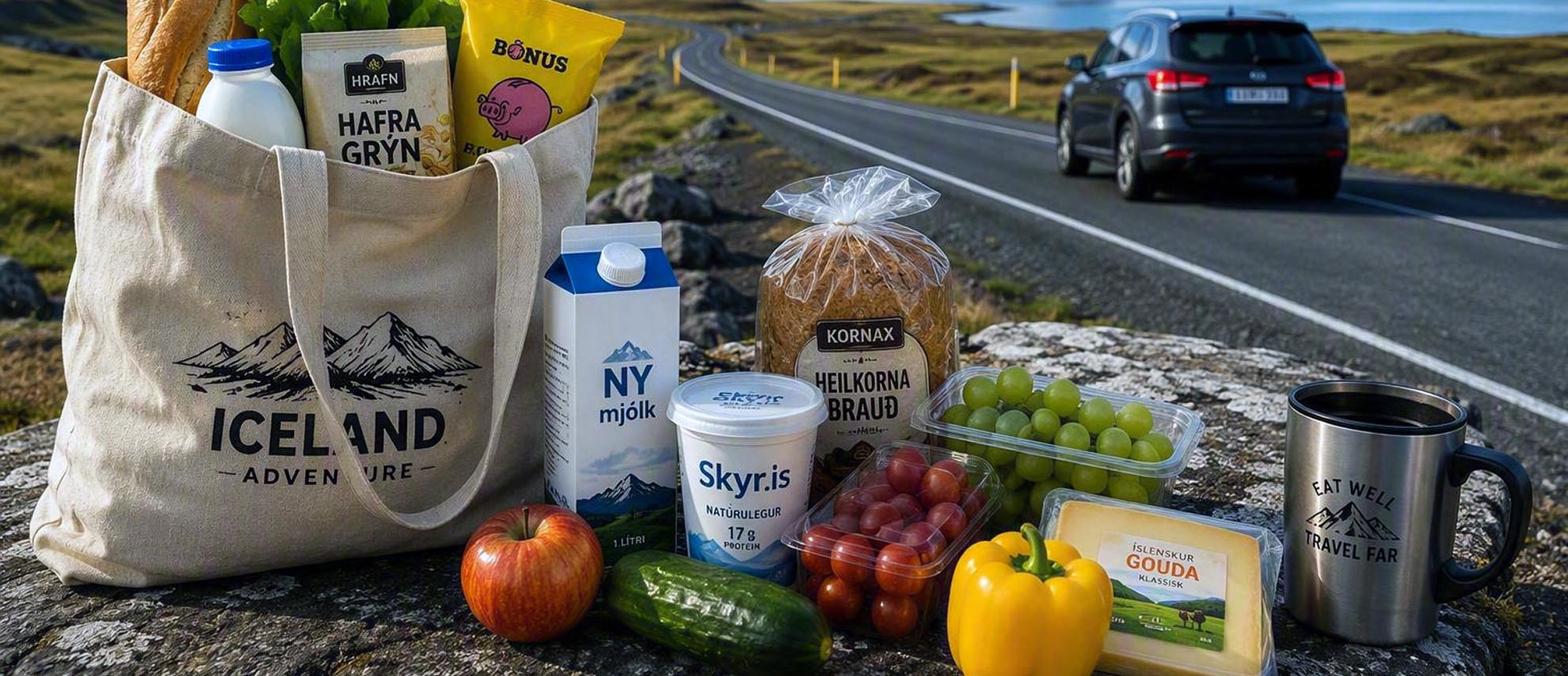
Quick answer: The cheapest grocery stores in Iceland are Bónus and Krónan, both budget-focused chains found across the country. Bónus is usually the cheapest overall. To save money on your Ring Road trip, stock up at these supermarkets in larger towns, check opening hours before you drive, and pack foods that travel well in a car or camper.
Food is one of the biggest expenses on any Iceland road trip. Restaurant meals often cost 3,000–5,000 ISK per person, and prices climb even higher in remote areas. For budget travelers driving the Ring Road, self-catering is the single best way to cut costs without cutting the experience short.
The good news? Iceland has reliable, affordable supermarkets. Once you know which chains to trust, where they're located, and what to buy, you can eat well for a fraction of the restaurant price.
This guide walks you through everything you need to know. You'll learn which supermarket chains offer the best value, where to restock along the Ring Road, what opening hours to expect, and which foods hold up best on the road. Let's help you spend less on groceries and more on the trip itself.
What Are the Main Supermarket Chains in Iceland?
Iceland has a handful of major grocery chains, and knowing the difference between them saves you real money. Not all stores are priced the same, and some are far easier to find on the road than others.
Here's a breakdown of the main players:
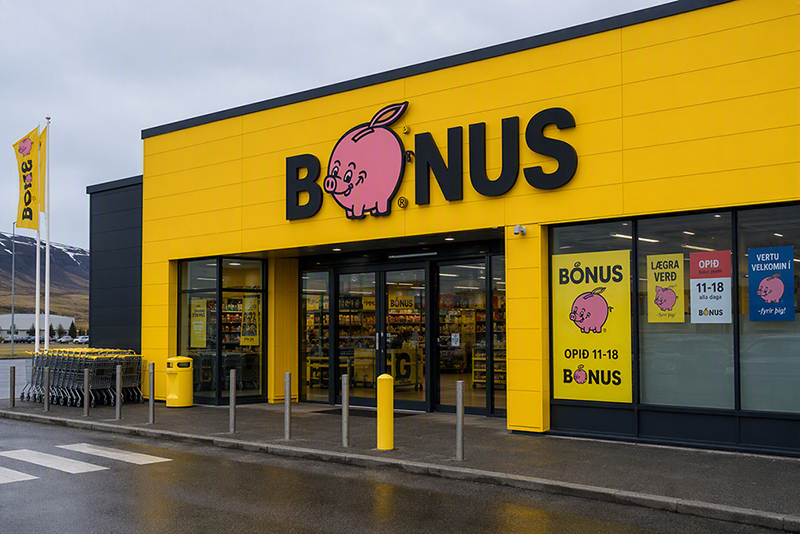
- Bónus – The most popular budget chain, marked by its yellow pig logo. Widely regarded as the cheapest supermarket in Iceland.
- Krónan – Another strong budget option, often with a wider selection of fresh produce.
- Nettó – A mid-range chain with some 24-hour locations, useful for late-night or early-morning stops.
- Krambúð and Samkaup – Smaller convenience stores found in rural areas. Handy in a pinch, but more expensive.
- 10-11 – A convenience chain found mostly in Reykjavík. Open long hours but among the priciest places to shop.
- Hagkaup – A larger store with a broad range of goods, including non-food items. Prices sit above Bónus and Krónan.
For budget travelers, Bónus and Krónan should be your main stops. Save the convenience stores for emergencies only, since their prices can be double what you'd pay at a discount chain.
Bónus vs Krónan: Which Is the Cheapest Supermarket in Iceland?
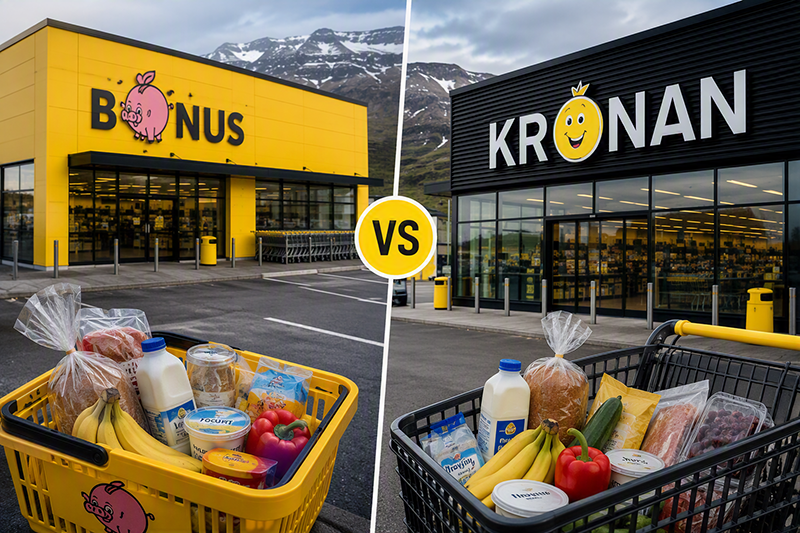
When it comes to bónus vs krónan, both are excellent budget choices—but they have small differences worth knowing.
Bónus is generally the cheapest supermarket in Iceland. It focuses on low prices over selection, so you'll find the essentials without much frills. It's the go-to for staples like bread, pasta, canned goods, dairy, and snacks. The trade-off is shorter opening hours and a slightly smaller fresh produce range.
Krónan is very close in price and often wins on variety. It tends to stock better fresh fruit and vegetables, a wider range of ready-made meals, and more vegetarian and vegan options. Krónan also has a useful app with digital coupons.
Which should you choose? If your priority is the lowest possible price on basics, choose Bónus. If you want a bit more variety—especially fresh produce or plant-based options—choose Krónan. Many travelers simply shop at whichever appears first on their route, since the price gap is small.
One tip: prices for the same item can vary slightly between the two, but both are dramatically cheaper than convenience stores or gas station shops.
Where to Restock Along the Ring Road
Stocking up for the Ring Road takes a little planning. Supermarkets cluster in towns, and long stretches of the route have no large stores at all. Buy enough to carry you between major stops.
Here are the key towns with reliable supermarkets along Route 1:
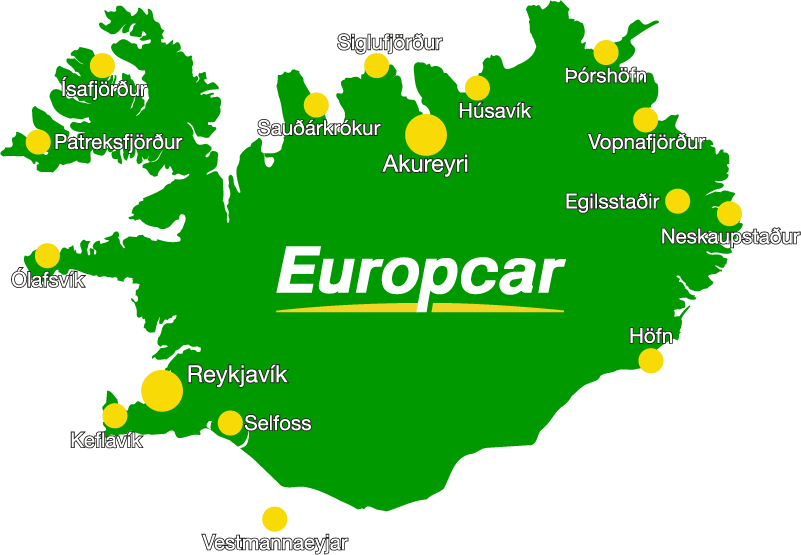
- Reykjavík – The best selection and prices. Stock up heavily before you leave the capital.
- Borgarnes – A common first stop heading north or west. Has a Bónus and Nettó.
- Akureyri – The largest town in North Iceland. Multiple supermarket options, including Bónus and Krónan.
- Egilsstaðir – The main hub in East Iceland. A good place to restock before quieter stretches.
- Höfn – A useful southeastern stop with a Nettó, handy after the remote eastern fjords.
- Selfoss and Hveragerði – Convenient stops in the South, close to popular sights along the Golden Circle route.
Between Egilsstaðir and Höfn, and across parts of the East Fjords, stores are scarce. The same applies to remote sections of the Westfjords if you detour there. Fill your cooler and pantry box before these gaps.
A simple rule: never let your food supply run low when passing through a large town. Restock even if you think you have enough.
What Are Supermarket Opening Hours in Iceland?
Opening hours in Iceland can catch travelers off guard, especially in rural areas. Planning around them prevents arriving at a closed store after a long drive.
General guidelines:
- Bónus – Typically open around 11:00 to 18:30 on weekdays, with shorter hours on weekends. Bónus is known for closing earlier than other chains.
- Krónan – Usually open from around 10:00 or 11:00 until 19:00 or 20:00.
- Nettó – Longer hours overall, and some larger locations (including in Reykjavík) stay open 24 hours.
- Convenience stores (10-11, Krambúð) – Open early and close late, sometimes 24 hours, but at premium prices.
Hours are shorter on Sundays and public holidays across all chains. In small towns, a single supermarket may close for the evening with no alternative nearby. Always check current hours online before relying on a specific store, as times change seasonally.
If you arrive in a town late, a Nettó or convenience store may be your only option. Plan bigger shops for daytime hours at Bónus or Krónan.
Which Foods Travel Well in a Car or Camper?
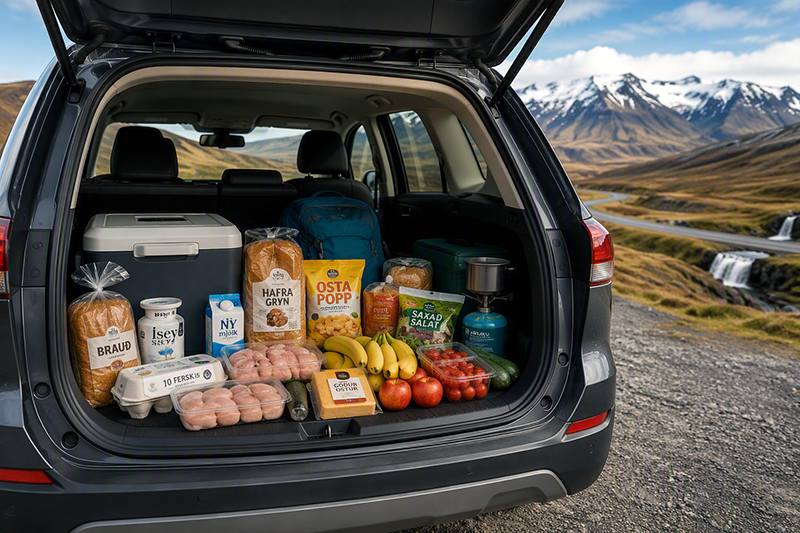
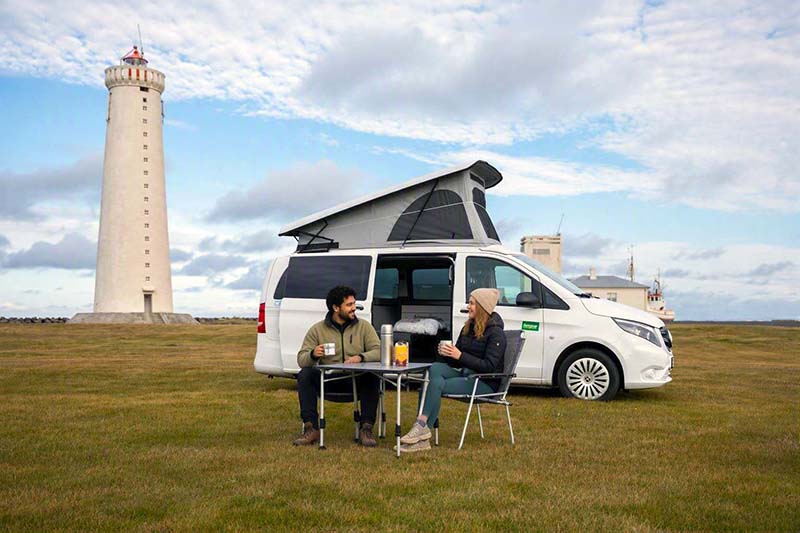
Self-catering on the road works best with foods that don't spoil quickly and need little or no cooking. If you're in a camper with a stove, your options widen. Either way, focus on simple, filling, and durable items.
Foods that need no fridge:
- Bread, crackers, and wraps
- Peanut butter, jam, and spreads
- Dried pasta and instant noodles
- Canned beans, soups, fish, and vegetables
- Nuts, dried fruit, granola bars, and trail mix
- Instant oatmeal and cereal
- Coffee, tea, and powdered drinks
Foods that keep well in a cooler:
- Cheese and butter
- Cured meats and hot dogs (a Icelandic favorite)
- Yogurt and skyr, Iceland's popular thick dairy product
- Eggs (they last well and cook easily)
- Fresh vegetables like carrots, peppers, and cucumbers
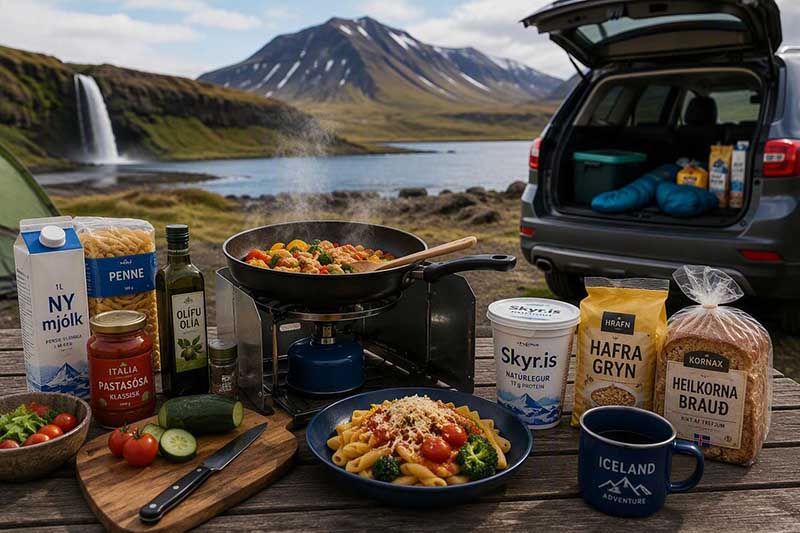
If you have a camper stove:
- Pasta with jarred sauce
- Instant rice and canned curry
- Soups and stews
- Scrambled eggs or omelets
A cooler box with ice packs makes a big difference. In cooler months, Iceland's climate helps keep food fresh, and you can often store items overnight in the car without spoilage.
Tips for Eating on a Budget in Iceland
Eating on a budget in Iceland comes down to smart shopping and a few local tricks. These small habits add up over a long trip.
- Shop at Bónus or Krónan whenever possible. Avoid gas stations and convenience stores for anything but emergencies.
- Refill a water bottle from the tap. Icelandic tap water is clean, fresh, and free. Skip bottled water entirely.
- Buy Icelandic hot dogs. A hot dog (pylsur) from a stand is one of the cheapest hot meals in the country, often under 700 ISK.
- Bring a reusable cooler and containers. They let you buy in bulk and store leftovers.
- Cook simple meals. If your rental is a camper, one-pot dinners save a fortune.
- Use supermarket loyalty apps. Krónan and Nettó offer digital deals that lower prices further.
- Buy alcohol at duty-free on arrival. Alcohol is expensive and only sold at state Vínbúðin stores. The airport duty-free shop is the cheapest option.
- Avoid pre-packaged single meals when you can. Basic ingredients cost less and stretch further.
With these habits, many travelers keep food costs to a fraction of what they'd spend dining out—leaving more room in the budget for fuel, tours, and experiences.
See also: How to Plan a Budget-Friendly Road Trip in Iceland.
Frequently Asked Questions
What is the cheapest supermarket in Iceland?
Bónus is generally the cheapest supermarket in Iceland. It focuses on low prices for everyday staples. Krónan is a close second and often has a wider selection of fresh produce and plant-based options.
Are Bónus and Krónan found all over Iceland?
Both chains are common in towns along the Ring Road, including Reykjavík, Borgarnes, Akureyri, Egilsstaðir, and Selfoss. However, remote areas—such as parts of the East Fjords—may have no large supermarket, so stock up in bigger towns.
How much does groceries cost for an Iceland road trip?
Costs vary by diet and trip length, but self-catering typically costs far less than restaurants. A restaurant meal often runs 3,000–5,000 ISK per person, while a day of groceries per person can cost considerably less if you shop at Bónus or Krónan.
Is tap water safe to drink in Iceland?
Yes. Icelandic tap water is clean, safe, and free. Refilling a reusable bottle from the tap is one of the easiest ways to save money and reduce plastic waste on your trip.
What are typical supermarket opening hours in Iceland?
Bónus usually opens around 11:00 and closes by 18:30, earlier than most chains. Krónan often runs from around 10:00 or 11:00 to 19:00 or 20:00. Some Nettó and convenience stores stay open later or 24 hours. Hours shorten on Sundays and holidays.
Can I buy alcohol at supermarkets in Iceland?
No. Supermarkets only sell low-alcohol beer. Wine, spirits, and full-strength beer are sold only at state-run Vínbúðin stores. The cheapest place to buy alcohol is the duty-free shop at Keflavík Airport on arrival.
What foods are best for a camper trip in Iceland?
Durable, easy-to-prepare foods work best: bread, pasta, canned goods, oatmeal, nuts, and dried fruit. If you have a camper stove, one-pot meals like pasta, rice dishes, and soups are cheap and filling. A cooler keeps dairy, eggs, and vegetables fresh.
Do I need to bring a cooler for an Iceland road trip?
A cooler box is highly recommended, especially in warmer months. It lets you buy perishables in bulk and store leftovers. In cooler seasons, Iceland's climate often keeps food fresh in the car overnight.
Plan Your Groceries, Enjoy the Drive
Smart grocery shopping is one of the easiest ways to keep an Iceland road trip affordable. Stick to Bónus and Krónan for the best prices, restock in larger towns before remote stretches, and pack foods that travel well. A little planning frees up your budget for the moments that matter—chasing waterfalls, soaking in hot springs, and driving the Ring Road at your own pace.
Before you set off, map out the towns with supermarkets along your route and note their opening hours. With your cooler stocked and your pantry box full, you'll be ready to explore Iceland without overspending on food.
Renting a car or camper with Höldur gives you the freedom to shop, cook, and eat on your own schedule—the foundation of a truly budget-friendly Iceland adventure.